
Short answer / Do-this-now: If high winds just tore up part of your roof, do not wait. Document the damage safely from the ground, protect the home from active leaks, then contact your insurance company and a trusted local roofer. Acting quickly limits interior damage and preserves your options for a proper roof inspection in Spokane.
Step 1: Document the Damage Safely (Before the Next Rain Hits)
What to do right away: Stay on the ground, take clear timestamped photos or video of missing or lifted shingles, exposed underlayment, dented vents, debris, and any visible leaks.
After every big windstorm in Spokane, I see the same thing: wind tears off shingle edges or full sections, exposing the underlayment. Then rain moves in and soaks the attic.
According to GAF in their article “Storm & Hurricane Roofing Resources,” visible signs like missing or lifted shingles must be documented immediately for proper roof repair.
Owens Corning’s “Roof Storm Damage Checklist” recommends recording dented or torn shingles, checking the attic for leaks, and photographing everything for insurance.
Checklist:
Take wide shots of the roof from the ground.
Zoom in on missing tabs, lifted shingles, exposed areas, and vents.
Photograph any interior leaks, stains, or ceiling bulges.
Make sure each photo or video has a timestamp.
Label your folder “Storm event – wind gusts Oct 2025.”
Don’t climb onto the roof — leave that to a roof repair professional.
Why? Because insurance companies expect you to show evidence of sudden storm damage right away. GAF’s article “What to Do If Shingles Blow Off Your Roof” says that documenting visible damage helps prove the cause.
Owens Corning echoes this — the faster you record the damage, the easier your insurance claim and roof repair process will be.
Step 2: Protect Your Home from Active Leaks
Short answer: Your goal tonight isn’t to fix the roof; it’s to stop water from coming in. Move furniture, put buckets under drips, and if a section is exposed, get a tarp in place or call for professional help.
When I get a 9:30 PM call after a Spokane Valley windstorm, I always say the same thing: “Don’t climb up there. Stay safe. We’ll handle the tarp.”
Insurance policies expect you to mitigate further damage. Placing a tarp or containment is part of that. If you don’t, insurers can deny part of the claim. (See insurance-guidance in the our “Will Insurance Cover My Roof?” article.)
Immediate steps:
Move furniture and electronics away from leaks.
Set buckets under drips.
If the ceiling bulges, carefully relieve pressure — but stay cautious.
Turn off power if water is near outlets or lights.
Only attempt tarping if it’s completely safe.
Secure the tarp fully over eaves and rakes.
Remember: your roof is already damaged. Tonight isn’t about a full roof repair — it’s about stopping more water until a certified roofer arrives with the right tools and safety gear.
Step 3: Call Insurance and a Roofer in the Right Order
Here’s the deal: Call your insurance first, then a roofer. That order keeps your claim clean and your repair timeline faster.
Why it matters:
Homeowners policies generally cover sudden wind damage, not neglect. According to Investopedia’s article “Winter Storms and Home Insurance,” most policies include wind coverage if the loss was unexpected.
GAF recommends: “If shingles blow off during a storm, document the damage, then contact your insurance provider.”
Calling the roofer next helps verify the damage. A professional roof repair inspection includes detailed photos and a written scope — something adjusters often skip.
Reporting quickly protects you. Some insurers have short claim windows after a storm.
Ask your insurer:
“What’s the deadline for reporting wind damage?”
“What’s my deductible for roof repair or replacement?”
“Do I need to tarp or mitigate damage immediately?”
Then call your roofer (like RC Roofing Specialists):
We’ll inspect the site, document everything, and help you decide if it’s a quick roof repair or a full insurance claim. Acting within 24–48 hours makes the claim smoother and prevents hidden damage from spreading.
Step 4: Is This a Small Repair or a Full Insurance Claim
Use this checklist to decide if it’s a small roof repair or full replacement.
You’re probably fine with a small repair if…
- Only 1-2 shingles missing or lifted, no exposed decking
- No interior leaks, no ceiling stains
- Damage confined to a very small section of the roof
You’re comfortable paying the deductible and doing business normally
You’re probably looking at an insurance claim if…
- Multiple shingles or tabs are missing or gone across different roof areas
- Exposed roof deck, underlayment visible
- Active leak, ceiling damage, water intrusion
- Supporting structures (vents, flashing) damaged or tree limb impact
- You expect cost to exceed your deductible significantly
What manufacturers say:
Owens Corning’s “Signs of Storm Damage on Your Roof” warns that missing shingles and water intrusion often need professional inspection, not “wait-and-see.”
GAF’s “Replacement of Storm-Damaged Shingles” bulletin says wind-lifted shingles and torn tabs can cause leaks and void warranties if left unrepaired.
If more than a few shingles are affected, treat it as an insurance claim, not a DIY patch. It’s cheaper to fix it right once than to chase leaks for months.
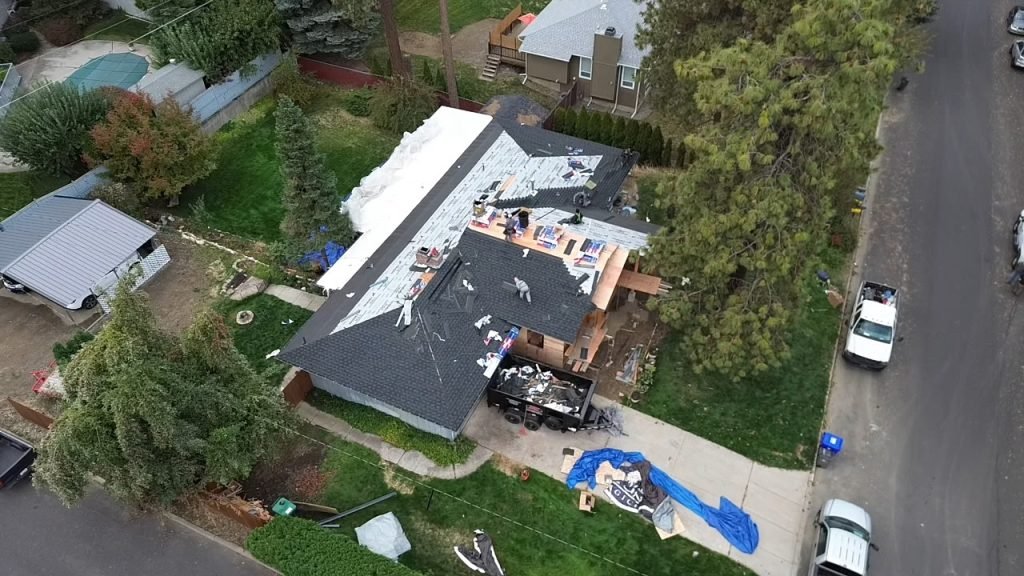
Why Spokane / North Idaho Roofs Get Hammered by Wind
Around Spokane County and North Idaho — Spokane Valley, Post Falls, Coeur d’Alene — we see tough storms every fall. Pine branches come down, valley gusts hit 50+ mph, and freeze-thaw cycles lift shingles.
The local conditions:
High winds funneling through the Spokane Valley and Lake Coeur d’Alene corridor.
Tree limbs abound — we have a ton of pines and firs dropping debris during storms.
Freeze-thaw & heavy fall rains: the roof gets soaked, then frozen, then weathered by wind; the shingles are stressed.
Wet winters & spring storms: when one gust hits a wet, cold roof, the protective seals can peel up.
If you’re in this area, your home faces these risks yearly. That’s why fast roof repair matters so much. One small exposed area can become a major leak by the next storm.
Quick FAQ for Tonight
Is my ceiling going to collapse?
If the ceiling is bulging or you see a large active drip or water pool, get out of that room now. The wet weight plus structural failure risk makes it unsafe. If it’s just a minor stain and no active leak, you’re probably okay temporarily—but schedule the roofer quickly.
Can I sleep in the house?
If there’s water dripping near electrical outlets, switches or light fixtures, the answer is no—call a professional and maybe stay elsewhere. If you only have a minor stain, the leak stopped, and no structural issue: yes, short-term you can sleep there. But plan the inspection first thing in the morning.
Will my insurance rates go up if I file a claim?
Maybe. It depends on your insurer, your deductible, your claims history and your local risk profile. Filing a claim for wind damage might increase future premiums, or you might choose to absorb the repair cost if it’s small. Review your policy talking to your agent about how your region handles wind/hail claims.
About the Author
RC Roofing Specialists is a family-owned roofing company led by GAF-certified builder Josh Honnold, a lifelong craftsman with 10+ years of experience who believes in doing every job right.
We’re licensed and insured in Washington and Idaho, serving Spokane, Spokane Valley, Liberty Lake, South Hill, Coeur d’Alene, Post Falls, and Hayden. Every project is clean, professional, and backed by a 10-year workmanship warranty on full roof installations & replacements with same-day or next-day leak repairs.
Need Fast Help After a Windstorm?
If you are in Spokane or Kootenai County and dealing with missing shingles, active leaks, or visible damage, do not wait for the next storm. Early documentation and inspection protect your home and your options.
Our company specializes in emergency response, roof tarping, and storm-damage inspections using manufacturer-recommended best practices.