Moss on a roof is common in Spokane and North Idaho because of moisture, shade, and seasonal weather changes. If it is ignored for too long, it can shorten the life of roofing materials and increase the risk of leaks.
This guide explains how to remove moss from a roof safely, what causes it to grow, and how to reduce the chance of it returning. The goal is to help homeowners understand the safest long-term approach.
Last updated: May 2026
Quick answer: how to remove moss from a roof safely?
The safest way to remove moss from a roof is with gentle cleaning methods that avoid damaging shingles or forcing water underneath roofing materials. Aggressive pressure washing and harsh scraping often cause more harm than the moss itself.
Long-term prevention is just as important as removal. Without fixing moisture and shade conditions, moss usually returns.
Why moss grows on roofs in Spokane & North Idaho
Moss grows in areas that stay damp for long periods of time. Roofs with heavy shade, poor drainage, or limited sunlight are more likely to develop moss.
Common conditions that contribute to moss growth include:
- Tree coverage over the roof
- Moisture trapped by debris
- Poor ventilation
- North-facing roof sections
- Frequent rain or snow buildup
These conditions are common throughout Spokane and North Idaho.
Why moss on a roof can become a problem
Small amounts of moss are not always an emergency. Problems begin when moss traps moisture against roofing materials for long periods.
Over time, moss can:
- Lift or separate shingles
- Trap water against the roof surface
- Increase wear on roofing materials
- Raise the risk of leaks and wood damage
The longer moss remains, the harder it becomes to remove safely.
How to remove moss from a roof safely
The safest approach focuses on gentle removal and protecting the roof system during the process.
Safe roof moss removal usually includes:
- Removing loose debris first
- Using low-pressure cleaning methods
- Applying roof-safe moss treatment products
- Avoiding aggressive scraping or pressure washing
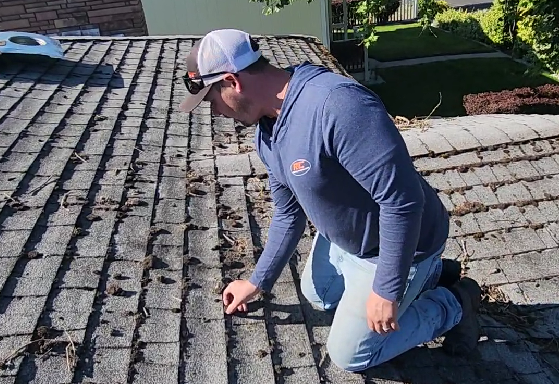
Walking on a moss-covered roof can also be dangerous because the surface becomes slippery.
Why pressure washing is usually not recommended
Pressure washing can force water underneath shingles and damage protective granules. This can shorten the life of the roof even if the moss is removed.
For asphalt shingles, gentler cleaning methods are usually the safer option. Roof condition and material type should always be considered first.
How to keep moss from coming back
Removing moss is only part of the solution. Preventing future moisture buildup matters just as much.
Ways to reduce moss growth include:
- Trimming back tree branches
- Improving roof ventilation
- Keeping gutters clean
- Removing debris regularly
- Allowing more sunlight to reach the roof
Some homeowners also install zinc or copper strips to help slow future moss growth.
When moss means the roof may already be damaged
Moss does not always mean you need a new roof. However, widespread moss growth on an older roof can sometimes hide underlying damage.
An inspection may be needed if:
- Shingles are lifting or cracking
- Leaks are already present
- Soft spots appear on the roof
- Moss returns quickly after cleaning
In some cases, moss is a sign that aging roofing materials are already failing.
Can roof moss be prevented completely?
No roof is completely moss-proof, especially in damp climates like Spokane and North Idaho. The goal is to reduce the conditions that allow moss to grow aggressively.
Proper installation, ventilation, drainage, and maintenance all help slow future buildup.
Roof Moss Removal FAQs
What is the safest way to remove moss from a roof?
The safest way to remove moss from a roof is with low-pressure cleaning methods and roof-safe treatments that do not damage shingles. Aggressive pressure washing often causes more damage than the moss itself.
Roof condition should always be considered before cleaning begins.
Can moss damage a roof?
Yes. Moss traps moisture against roofing materials, which can increase wear and raise the risk of leaks over time.
If moss becomes widespread, it can also lift shingles and contribute to wood damage underneath the roof.
Should I pressure wash moss off my roof?
In most cases, no. Pressure washing can damage shingles and force water underneath roofing materials.
Gentler cleaning methods are usually safer for asphalt roofing systems.
How often should roof moss be removed?
That depends on moisture, shade, and roof condition. In damp climates, periodic cleaning and maintenance are often needed to prevent heavy buildup.
Regular maintenance is usually easier and less expensive than waiting until moss becomes severe.
Can moss mean I need a new roof?
Not always. Moss alone does not automatically mean roof replacement is necessary.
However, older roofs with widespread moss and underlying damage may eventually require replacement instead of repeated cleaning.
Roofing terms related to moss growth
- Granules: Protective coating on asphalt shingles
- Ventilation: Airflow system that helps control moisture
- Flashing: Metal used to prevent leaks around roof openings
- Drainage: How water flows off the roof
- Roof pitch: The steepness of the roof surface
Understanding these terms helps explain why moss develops.
Service area
RC Roofing Specialists serves Spokane, Spokane Valley, Liberty Lake, South Hill, Coeur d’Alene, Post Falls, and Hayden. We are licensed and insured in Washington and Idaho with over 10+ years of local experience.
Final note
Moss growth is common in this region, but it should not be ignored. Safe removal and proper maintenance help reduce long-term roofing problems.
That is the purpose of this guide.