What happens during a roof inspection?
A roof inspection in Spokane involves a detailed review of the roof surface, drainage areas, flashing, and attic conditions to identify current issues and prevent future damage. We focus on exterior materials, transition points where leaks start, and interior moisture or ventilation signs. A good next step today is to share clear photos so we can help you decide if an inspection is needed now or can be scheduled later.
Get Help Today
- Text us clear photos or video taken safely from the ground or attic
- We reply with an inspection window and explain what we look for in Spokane conditions
- After the inspection, we outline findings and next steps clearly
Why Roof Inspections Matter in Spokane
Roofs in this region face a mix of stresses that do not always cause immediate leaks. Spokane Valley wind gusts can slowly lift shingle edges, South Hill pine needles collect in valleys and hold moisture, and heavy wet snow near Coeur d’Alene adds weight that tests seams during freeze thaw cycles. A roof inspection in Spokane helps uncover these issues before they turn into interior damage or structural concerns.
Inspections are especially valuable before winter, after major windstorms, and during real estate transactions. They give homeowners clarity about roof condition rather than relying on assumptions or visible leaks alone.
What We Check During a Roof Inspection
Our team follows a consistent process designed to mirror how water and air move through a roofing system. This is not a quick walk around the house, but a methodical review of the areas most likely to fail first.
Roof surface and materials
Asphalt shingles or metal panels for cracking, movement, corrosion, or impact marks
Ridge caps and field areas where wind exposure and sun wear are highest
Flashing and transitions
Pipe boots, vents, skylights, and wall intersections
Valleys and roof edges where runoff concentrates during heavy rain
Drainage and interior indicators
Gutters and downspout flow paths
Attic moisture, staining, ventilation balance, and airflow patterns
Exterior Inspection Steps
Exterior inspections are performed only when conditions are safe, using roof access or ground-level views depending on pitch and weather. Wind, rain, and snow exposure often reveal lifted shingles, loose fasteners, or flashing separation that would not be visible from the ground alone. During a roof inspection in Spokane, we pay close attention to how the roof sheds water and resists wind under real local conditions.
We also note workmanship details from past repairs or installations. Improper sealing or incorrect flashing placement often shows up years later during heavy rain or spring melt.
Interior and Attic Inspection
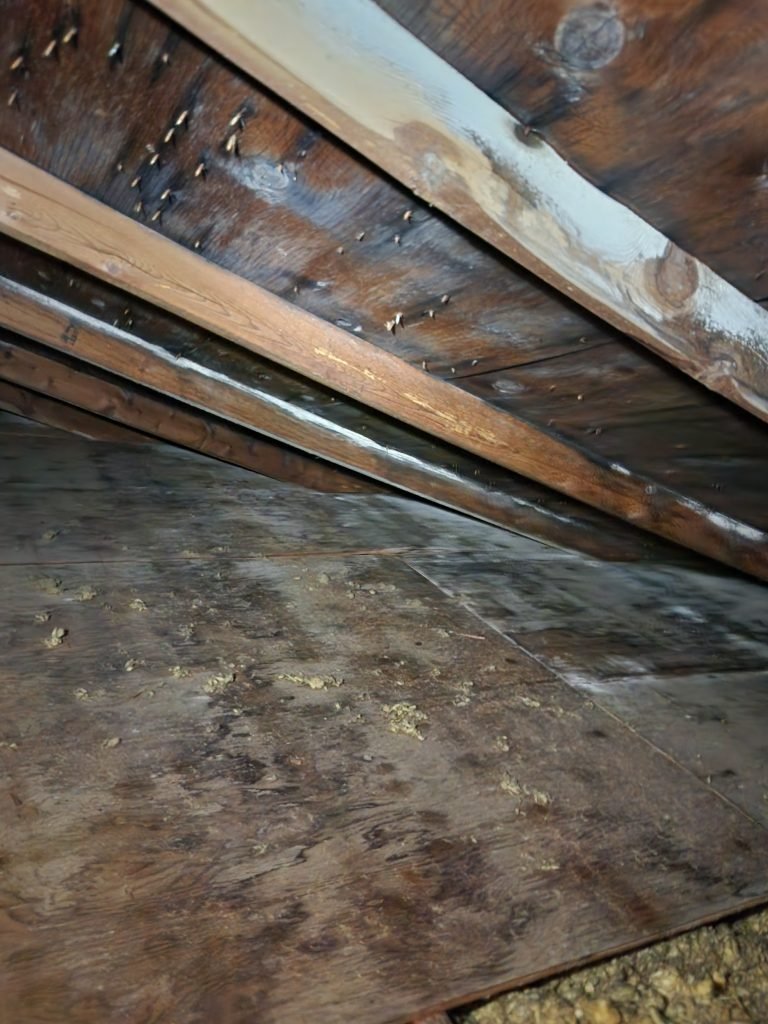
The attic is one of the most important parts of an inspection because it often shows problems before they reach living spaces. Moisture staining, damp insulation, rusted fasteners, or mold-like growth can point to small leaks or ventilation imbalances. These signs help us trace issues back to their source rather than guessing from the roof surface alone.
We approach attic inspections carefully and safely. Homeowners should never feel pressure to climb into tight or unsafe spaces on their own.
Winter Roof Inspections in Spokane
Inspections can still provide valuable information during winter, even when snow limits what can be seen on the surface. Exposed areas, edges, penetrations, and attic conditions still reveal how the roof is performing. A winter roof inspection in Spokane often focuses on moisture intrusion risk, ice dam formation, and identifying areas that should be revisited once snow clears.
In many cases, winter inspections help homeowners plan repairs rather than rushing into unsafe work. This approach protects both the home and the people working on it.
What a Quality Roof Inspection Looks Like in Spokane
- Visual inspection of all accessible roof surfaces
- Flashing and penetration review
- Attic moisture and ventilation check
- Photo documentation of findings
- Clear explanation of condition and risks
- Straightforward recommendations
What Happens After the Inspection
After the inspection, we explain what we found in plain language. Sometimes the best outcome is reassurance that the roof is performing as expected and only needs monitoring. In other cases, small repairs or maintenance can prevent much larger problems later.
Inspections also help homeowners plan ahead. Knowing the condition of your roof makes it easier to budget, schedule work around seasons, and avoid surprises during storms or home sales.
How Roof Inspections Help Prevent Bigger Problems
Small roofing issues rarely stay small in this climate. Moisture trapped under shingles, slow flashing failures, or blocked drainage paths often worsen during heavy rain or snowmelt. Regular inspections help identify these risks early.
Manufacturers like GAF and Owens Corning emphasize proper inspection and maintenance as key factors in roof longevity. Following these guidelines helps extend the life of roofing materials and reduces unexpected repairs.
When Homeowners Should Schedule an Inspection
There are several times when an inspection makes the most sense. Before winter is one of the most common, as roofs need to handle snow load and ice. After strong wind events or falling debris is another key moment.
Inspections are also common before buying or selling a home. They provide a clearer picture of roof condition and help avoid last-minute surprises during closing.

FAQs for Spokane and North Idaho
How often should you get a roof inspection in Spokane?
Most homes benefit from an inspection every one to two years. Inspections are also recommended after major windstorms or before winter begins. Regular reviews help catch issues before moisture causes structural damage.
Can you do a roof inspection in winter?
Yes, inspections are still useful during winter months. While snow can limit surface visibility, interior checks and exposed areas still provide important insights. Follow-up inspections can be scheduled once conditions improve.
What does a roof inspection include?
It includes reviewing roof materials, flashing, drainage paths, and attic conditions. The goal is to identify wear, damage, or moisture pathways early. Our process aligns with guidance from manufacturers such as GAF and Owens Corning.
How long does a roof inspection take?
Most inspections take under an hour for an average home. Larger or more complex roofs may take longer due to pitch or access challenges. We take the time needed to explain what we find clearly.
Will an inspection find small leaks?
Yes, many small leaks leave attic or decking signs long before water appears inside the home. Early detection helps prevent insulation damage and mold growth. This is one of the biggest benefits of a roof inspection in Spokane.
Do inspections help with insurance claims?
Inspections provide photos and documentation that many homeowners find helpful. Coverage depends on your policy, but having clear records often supports the claims process. We document findings without speaking for insurers.
What areas do you serve?
We serve all of Spokane County and North Idaho, including Spokane Valley, South Hill, Liberty Lake, Post Falls, Hayden, and Sandpoint. Our focus on local communities helps us design roofs that stand up to regional wind, snow, and freeze–thaw cycles.
About RC Roofing Specialists
RC Roofing Specialists is a family-owned roofing company led by GAF-certified builder Josh Honnold, a lifelong craftsman with 10+ years of experience who believes in doing every job right.
We’re licensed and insured in Washington and Idaho, serving Spokane, Spokane Valley, Liberty Lake, South Hill, Coeur d’Alene, Post Falls, and Hayden. Every project is clean, professional, and backed by a 10-year workmanship warranty on full roof installations & replacements with same-day or next-day leak repairs.