
Wind damage on a roof is common in Spokane and North Idaho because seasonal gusts, open terrain, and fast-moving storm fronts put constant pressure on shingles and metal panels. Homeowners can often spot early warning signs safely from the ground by looking for lifted materials, debris, or changes along ridges and edges. The best next step is to document what you see with photos and have our team review them.
Get Help Today
- Text us clear photos or video taken safely from the ground or attic
- We review the footage and explain whether wind damage is likely
- If needed, we schedule a safe inspection window based on Spokane weather
Why Wind Damage Is Common in Spokane
Spokane experiences frequent wind events that move quickly through the region, especially during seasonal transitions. Spokane Valley wind corridors, South Hill exposure, and the open terrain around North Idaho all increase roof stress. Wind damage on a roof often starts small but worsens when combined with rain, pine needles, and freeze thaw cycles.
Ground-Level Signs of Wind Damage to Look For
This checklist focuses only on what homeowners can see safely from the ground. We never recommend climbing on the roof after a storm.
Missing or lifted shingles
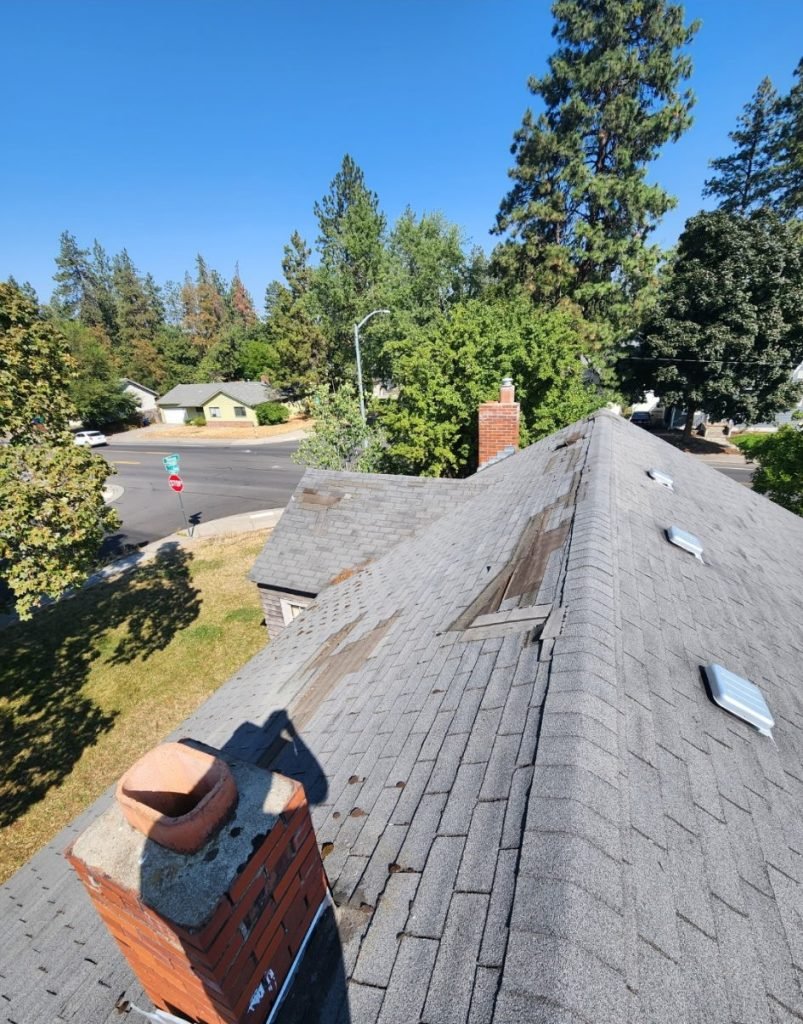
After strong wind gusts, shingles may be fully missing or slightly lifted along the edges. From the ground, look for dark patches, uneven roof lines, or areas that appear flatter or glossier than the surrounding shingles. Even a small lift can break the seal that keeps water out.
Shingles flipped or creased
Wind can catch the bottom edge of a shingle and bend it upward, creating a visible crease or fold. These shingles often do not lay flat afterward and may cast small shadows you can see from the ground. Creased shingles are weakened and more likely to leak during rain or snow melt.
Debris or shingle granules near downspouts
If you notice piles of gritty material near downspouts or at the base of the roof, that can indicate surface wear from wind. Granules protect shingles from sun and moisture, so sudden loss after a storm is a concern. This is commonly seen after fall and winter wind events in Spokane.
Loose ridge cap shingles
Ridge caps sit at the highest point of the roof and take the most direct wind impact. From the ground, they may look uneven, lifted, or slightly crooked compared to the rest of the ridge line. Loose ridge caps are a common entry point for wind-driven rain.
Bent or lifted metal panels
On metal roofs, wind damage often shows up as lifted panel edges or slight waviness where panels meet. You may also notice fasteners that look raised or misaligned from the ground. Even small shifts can change how water flows off the roof.
Flashing visibly out of place
Flashing protects the areas where the roof meets walls, chimneys, or other transitions. After a windstorm, flashing may appear bent, pulled away, or no longer flush against the surface. These gaps often lead to leaks during heavy rain rather than immediately after the storm.
Subtle Wind Damage Homeowners Often Miss
Not all wind damage on a roof is obvious right after a storm. Small lifts, broken seals, or loosened fasteners may not leak immediately. Heavy rain and freeze thaw cycles often expose these issues weeks later, especially in Spokane winters.
Wind Damage vs Normal Wear
This is a common question and not a sales pitch. Knowing the difference helps homeowners plan correctly.
Likely Wind Damage If:
Damage appeared suddenly after a storm
Shingles look lifted or displaced
Nearby debris shows signs of strong gusts
Likely Wear and Tear If:
Shingles are uniformly aging
Granule loss is widespread and gradual
No recent storms occurred
Wind patterns in Spokane can accelerate failure that looks like age but behaves like storm damage.
What to Do After a Windstorm in Spokane
Start by walking the property and checking the roofline from multiple angles. Take photos or video from the ground and note any interior ceiling stains or attic moisture. wind damage on a roof is easier to address when documented early, even if repairs are not immediately needed.
What a Quality Repair Looks Like in Spokane
- Photo-documented inspection
- Fastener and seal integrity checked
- Proper shingle or panel replacement
- Flashing reset or replaced correctly
- Clean job site and debris removal
- Final verification that no moisture is getting in
FAQs for Spokane and North Idaho
How do I know if my roof was damaged by wind or just old age?
Wind damage on a roof usually appears suddenly after a windstorm and affects specific areas like ridges, edges, or one slope. Lifted shingles, shifted ridge caps, or flashing pulled out of place are common indicators. Normal wear develops slowly and tends to look consistent across the entire roof.
Can wind damage cause leaks weeks or months later?
Yes, this is very common in Spokane and North Idaho. Wind can break shingle seals or loosen flashing without letting water in right away. As rain, melting snow, or freeze thaw cycles occur, wind damage on a roof often turns into visible leaks later.
What wind speed can damage a roof in Spokane?
Roof damage can happen at lower wind speeds than many homeowners expect. Gusts in the 40 to 60 mph range can lift shingles, especially on older roofs or in exposed areas like South Hill and Spokane Valley. Repeated gusts over time are often more damaging than one strong burst.
Should I tarp my roof if I suspect wind damage?
In most cases, homeowners should not tarp their own roof due to safety risks. Wet surfaces, ice, and steep pitches make falls more likely. It is usually safer to document the suspected wind damage on a roof from the ground and have a professional assess next steps.
Can wind damage a roof without knocking shingles off?
Yes, and this is one of the most commonly overlooked issues. Shingles can lift just enough to break the seal and then settle back into place. This type of wind damage on a roof often leads to delayed leaks without obvious missing shingles.
How soon should I have my roof inspected after a windstorm?
You should have your roof checked as soon as weather conditions are safe. Early inspections help confirm whether Wind Damage on a Roof occurred before rain or snow makes the issue worse. Documentation is also easier when damage is fresh.
What areas do you serve?
We serve all of Spokane County and North Idaho, including Spokane Valley, South Hill, Liberty Lake, Post Falls, Hayden, and Sandpoint. Our focus on local communities helps us design roofs that stand up to regional wind, snow, and freeze–thaw cycles.
About RC Roofing Specialists
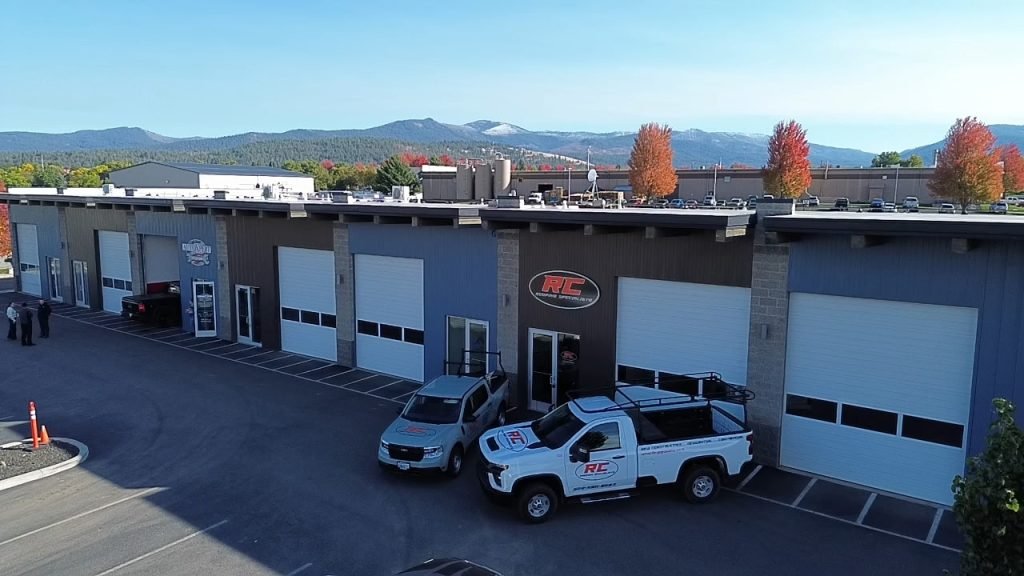
RC Roofing Specialists is a family-owned roofing company led by GAF-certified builder Josh Honnold, a lifelong craftsman with 10+ years of experience who believes in doing every job right.
We’re licensed and insured in Washington and Idaho, serving Spokane, Spokane Valley, Liberty Lake, South Hill, Coeur d’Alene, Post Falls, and Hayden. Every project is clean, professional, and backed by a 10-year workmanship warranty on full roof installations & replacements with same-day or next-day leak repairs.